
Christ ordered the church with five gifts.
Apostolic ministry is Christ-ordered ministry led by apostles — one of the five ascension gifts named in Ephesians 4:11 — through whom the Lord governs, teaches, equips, and sends His people.
Apostolic ministry is Christ-ordered ministry.
An apostolic church is a local body of believers ordered by the fivefold ministry gifts of Ephesians 4 — apostle, prophet, evangelist, pastor, and teacher — with recognized apostolic leadership and governance. The Lord Jesus Christ is confessed as the chief apostle (Hebrews 3:1) and the chief shepherd (1 Peter 5:4). The Scriptures are the final authority. The believer is called into covenant community and formed into a kingdom citizen through apostolic teaching, the active work of the Holy Spirit, and the shared life of the saints.
Apostolic is not a style of worship. It is not an emotional register. It is not a dress code or a music format. Apostolic is a government — the way Christ Himself ordered His church when He ascended and gave gifts to men (Ephesians 4:8–11).
Where apostolic government is recognized, the local church is covered, formed, and sent. Where it is absent, pieces of what Christ gave are missing — and the body cannot come to the full maturity Christ designed.
Five gifts. One body. One assignment.
Christ gave five ascension gifts to His church — not as five different jobs, but as five necessary graces for a single assignment: that the body of Christ would be equipped for ministry, built up in love, and brought into the unity and maturity of Christ Himself.
Apostle
Sent one. Lays foundations, establishes government, confirms doctrine, and fathers spiritual sons and daughters into their callings.
Prophet
Spokesperson. Declares the mind and heart of God for a season, confirms direction, and calls the church back to Scripture when it drifts.
Evangelist
Harvester. Announces the gospel, draws the lost into salvation, and equips the saints to carry the gospel into every sphere they occupy.
Pastor
Shepherd. Guards, feeds, and cares for the covenant community, carrying the burden of the souls entrusted to him.
Teacher
Builder. Expounds the Scriptures with precision so the saints are grounded, discerning, and able to teach others.
No gift is self-sufficient. Each needs the other four. Where one is absent, the body is partially furnished — and the church cannot come to the full stature Christ intended until all five are honored and operating.
Government is covering, not control.
Apostolic government is the ordering of the church under the authority of apostles and the fivefold ministry, in submission to Christ as the head and the Scriptures as the final rule. It is the biblical pattern laid down in the New Testament — not a hierarchy of control, but a covering of equipping, protection, and sent-ness.
An apostle is not a title. An apostle is a function: one Christ has sent, who lays foundations, who establishes government, who fathers spiritual sons and daughters, and who confirms doctrine against the standard of the Scriptures. Where apostolic function is active, the local church has a clear foundation and a clear direction.
At Embassy Covenant Church International, apostolic government is expressed in a formal governance architecture — a Presbytery of recognized apostolic voices, an Executive Board of ministry officers, and standing committees — all under the apostolic covering of Lead Apostle Bishop Hugh Daniel Smith. This architecture is not bureaucracy. It is the visible shape of how Christ's authority is exercised in the house.
Apostolic, Pentecostal, and non-denominational — the real difference.
Many people arrive at Embassy wondering what makes an apostolic church different from the Pentecostal, Baptist, or non-denominational churches they have attended before. Here is the honest answer in three parts.
Apostolic vs. Pentecostal
Pentecostal describes an experience — the ongoing work of the baptism and gifts of the Holy Spirit. Apostolic describes a government — the ordering of the church under apostles and the fivefold gifts. Many apostolic churches are also Pentecostal in experience. Not every Pentecostal church recognizes apostolic government.
Apostolic vs. Baptist
Baptist tradition centers on believer's baptism, local-church autonomy, and congregational leadership. Apostolic ministry affirms believer's baptism but orders the local church under apostles and the fivefold gifts rather than congregational vote. The authority structure, not the baptism, is where the two streams differ most.
Apostolic vs. Non-denominational
Non-denominational describes what a church is not — not affiliated with a historic denomination. Apostolic describes what a church is — ordered by Christ-appointed apostles under scriptural authority. A church can be both, and many are: non-denominational in affiliation, apostolic in order.
What apostolic looks like in practice.
Embassy Covenant Church International is a multi-campus, multi-hub apostolic church anchored at Embassy Metro Detroit in Walled Lake, Michigan, with regional campuses in Houston, Ann Arbor (Ypsilanti), Southfield, and Metro Atlanta (McDonough), plus hubs in North Carolina, Illinois, Kalamazoo, East and West Detroit, and Kenya.
Apostolic ministry at Embassy is expressed through:
- Weekly apostolic teaching from Lead Apostle Bishop Hugh Daniel Smith and the ministers of the house — expounding the Scriptures, calling believers into kingdom citizenship, and forming people into mature sons and daughters.
- Prayer and intercession as the engine room of the ministry — not optional, not occasional, but foundational to everything else.
- The Diamond Leadership Academy — the formal training arm for leaders Christ is raising up for apostolic reach into every sphere of society.
- Named ministries that form believers at every life stage: Rooted (singles), Oathbound (men), Flourish (women), SALT (seniors 65+), and Kingdom Kids (children).
- The Kingdom Brief Podcast — Bishop Hugh's prophetic and apostolic interpretation of current cultural and civic moments.
- Civic engagement that extends the apostolic mandate into the city — including Walk a Mile Wednesday with the Detroit Police Department, Hope Shelters, and partnerships with SIS-HER and Alternatives for Girls.
- Covenant membership as the real posture of belonging — not attendance, but citizenship in a kingdom nation that will outlive this age.
This is the shape apostolic ministry takes at Embassy. Not perfect — none of it is. But ordered. And through that ordering, Christ is building a people who will outlive the room they first encountered Him in.
Come as you are. Be formed as a kingdom citizen.
Whether you can visit a campus, join through eChurch, or watch Sunday from across the world — there is a seat for you here. Embassy exists to form you into the fullness of what Christ called you to.
Apostolic ministry — the plain questions.
What is apostolic ministry?
Apostolic ministry is Christ-ordered ministry led by apostles — one of the five ascension gifts named in Ephesians 4:11 — through whom the Lord governs, teaches, equips, and sends His people. Apostolic churches confess Christ as the chief apostle and the Scriptures as the final authority, and recognize apostolic authority as the foundation on which prophets, evangelists, pastors, and teachers build.
What is an apostolic church?
An apostolic church is a local church ordered by the fivefold ministry gifts of Ephesians 4 — apostle, prophet, evangelist, pastor, and teacher — with recognized apostolic leadership and governance. The believers in an apostolic church are formed into kingdom citizens through covenant community, apostolic teaching, and the active work of the Holy Spirit.
What is the difference between an apostolic church and a Pentecostal church?
An apostolic church is defined by its governance structure — recognized apostolic leadership and fivefold-gift ordering — while a Pentecostal church is defined by its emphasis on the baptism of the Holy Spirit and the ongoing work of the Spirit's gifts. The two overlap: many apostolic churches are also Pentecostal in experience, but not all Pentecostal churches recognize or operate under apostolic government.
What is the difference between apostolic and non-denominational?
Non-denominational describes what a church is not — not affiliated with a historic denomination. Apostolic describes what a church is — ordered by Christ-appointed apostles under scriptural authority. A church can be both; what makes it apostolic is the recognition and submission to apostolic government, not the absence of denominational ties.
What are the fivefold ministry gifts?
The fivefold ministry gifts are apostle, prophet, evangelist, pastor, and teacher — the five offices Christ gave to His church when He ascended, named in Ephesians 4:11. These gifts exist to equip the saints for ministry, build up the body of Christ, and bring the church into the unity and maturity of Christ Himself.
What is apostolic government?
Apostolic government is the ordering of the church under the authority of apostles and the fivefold ministry, in submission to Christ as the head. It is the biblical pattern of leadership laid down in the New Testament — not a hierarchy of control, but a covering of equipping, protection, and sent-ness so the body of Christ can walk in its calling.
Does Embassy teach that apostles still exist today?
Yes. Embassy teaches that the ascension gifts of Ephesians 4 — apostle, prophet, evangelist, pastor, teacher — remain active in the church until Christ returns. The need these gifts fulfill (equipping the saints, building up the body, bringing the church to maturity) has not changed, and so neither have the gifts.
Who is Bishop Hugh Daniel Smith?
Bishop Hugh Daniel Smith is the founder, Lead Apostle, and Senior Pastor of Embassy Covenant Church International. He is an apostolic father to leaders across multiple nations, the founder of the Diamond Leadership Academy, the host of the Kingdom Brief Podcast, and the author of a teaching corpus that includes The Grace of Mastery, the Oath framework, Kingdom Nation, and Royal Priesthood.
How is apostolic ministry different from a traditional pastor-led church?
Apostolic ministry orders the local church around all five ascension gifts, not just the pastoral gift. A traditional pastor-led church centers on the shepherding function; an apostolic church recognizes that apostles, prophets, evangelists, and teachers each carry a necessary grace, and that the local church matures only when all five are honored and active.
What should I expect in an apostolic church service?
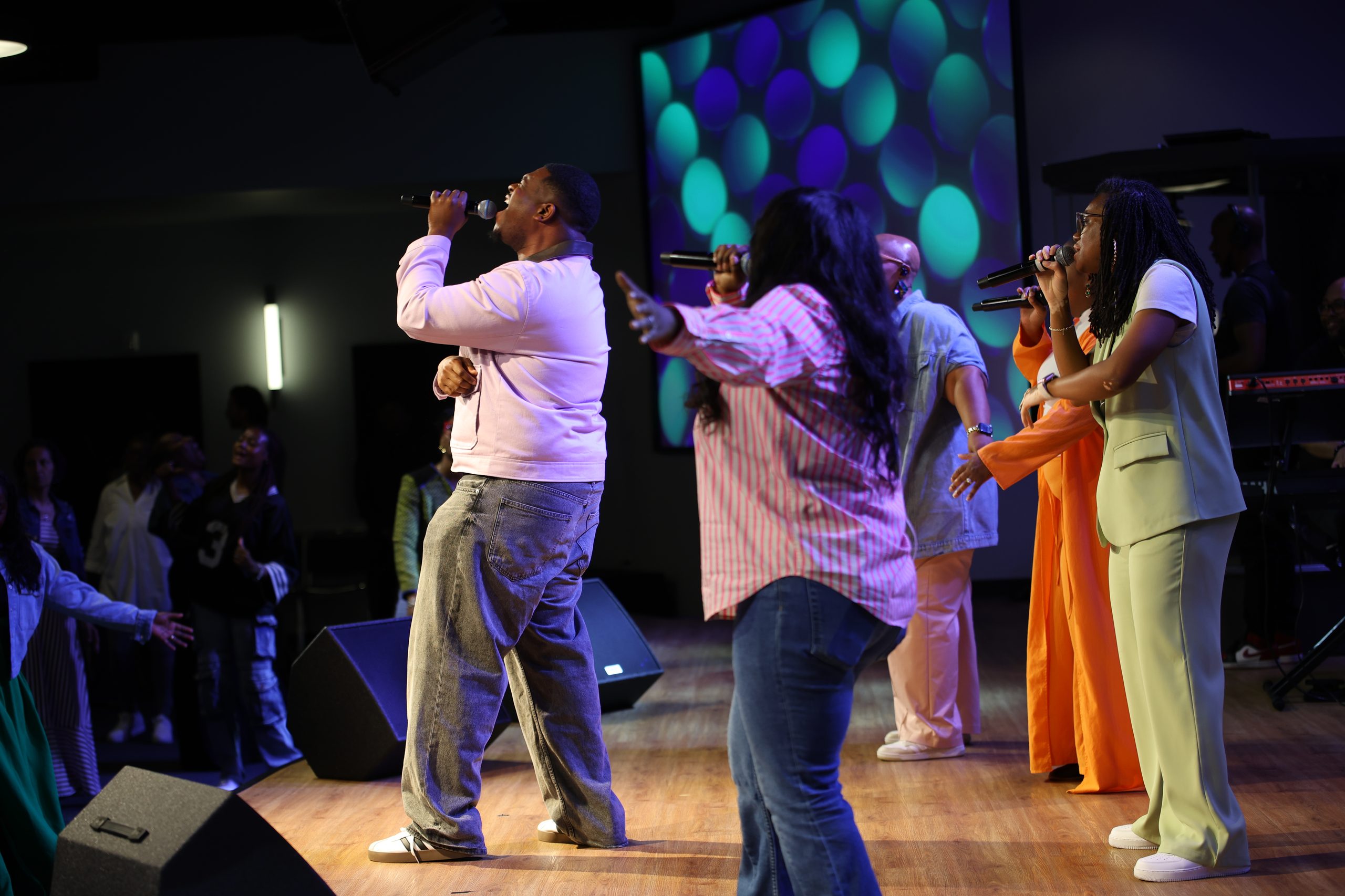
Expect Spirit-led worship, apostolic teaching from the Scriptures, and clear next steps for formation. Apostolic services at Embassy are about 90 minutes, open to visitors at any stage, and anchored to real engagement with the Word, prayer, and the covenant community — not performance, not entertainment, not a lecture.